
Best Social Media Platforms for Churches
Social Media, Church Growth, Best Social Media for Churches
Which social media platforms should your church use? This post compares Facebook, Instagram, YouTube, TikTok, and other church social media platforms so you can decide where to focus your time, energy, and very limited volunteers.
Picture this: it is Tuesday morning, your sermon is still half-finished, the copier just jammed again, and someone on your team says, “Pastor, we really need to be on TikTok.” Your nephew swears TikTok is the future, your deacon says church Facebook is all that matters, your worship leader is begging for a church YouTube strategy, and honestly you are just praying, “Lord, can I get through this week first?”
You love people. You love the gospel. But you do not love trying to be a full‑time pastor, part‑time video editor, and unpaid social media manager. You have too many platforms, not enough time, and exactly three volunteers…one of whom still prints emails to read them. Bless their heart.
This post is here to take that weight off your shoulders. We are going to walk through the best social media for churches in simple language. We will look at Facebook, Instagram, a healthy church YouTube strategy, and even ask if TikTok is worth your precious hours. We will talk about real stories, real people, and real limits on your time and budget—like a friend who also happens to think in charts and numbers for a living.
By the end, you will know exactly which church social media platforms to focus on this year, and which ones you can lay at the feet of Jesus and kindly ignore for now. Let us lay out the plan, then we will dive in together.
Table of Contents
1. Why Platform Choice Matters for Your Ministry
Let me tell you about Grace Fellowship, a small church with a big heart and one very tired volunteer named Lisa. One January, they decided, “This is the year! We will be everywhere.” Facebook, Instagram, YouTube, TikTok, Threads, even LinkedIn—if it had a login, they were on it. For three weeks, it looked amazing. Then the youth pastor got sick, the copier died, and Lisa started avoiding eye contact in the hallway like you avoid the person who wants to start a 13‑week Leviticus study in July.
By Easter, every account was half‑alive. Sermons were posted late, events were missed, and nobody knew where to look for updates. Their problem was not a lack of passion. It was a lack of focus. They tried to drive down every digital highway at once and ran out of gas on all of them. In trading terms, they over‑diversified their “attention portfolio” and ended up with weak returns everywhere instead of strong results in one or two places that fit them best.
Jesus said, “Go ye therefore, and teach all nations” (Matthew 28:19 KJV). That is the Great Commission, not the Great Compulsion to join every app that hits the app store. You are called to go, but you are not called to go everywhere at once. The best social media for churches is not “all of them.” It is the right few that match your people, your message, and your capacity. Focus beats quantity every time.
2. Facebook: The Digital Church Lobby
Think of Facebook as your digital church lobby. Brother James posts prayer requests in the church group before you even hear about them. Sister Rosa shares Sunday’s sermon replay with all 327 of her cousins. A quiet young mom watches your Facebook Live for three months before she finally works up the courage to walk through your physical doors. She already knows your face, your voice, and even your joke about the one guy who always sleeps in the back row.
Facebook is still one of the best social media for churches, especially if your people are over 35 or love community events. In 2026, Facebook Groups often reach 30–60% of members, while normal Page posts may only hit 2–6%. That means a simple prayer request in a Group can reach far more hearts than a fancy graphic on your Page. Treat your Page like the front door and your Group like the living room where real conversation happens.
Best uses for church Facebook? Event promotion, Facebook Live sermons, Groups for discipleship or prayer, and quick community announcements. If you picture the lobby after service—people chatting, sharing needs, inviting friends—that is the kind of content that works here. You do not need Hollywood production. You just need to show up consistently and care for people, the same way you do on Sunday, only now with the “Share” button helping you.
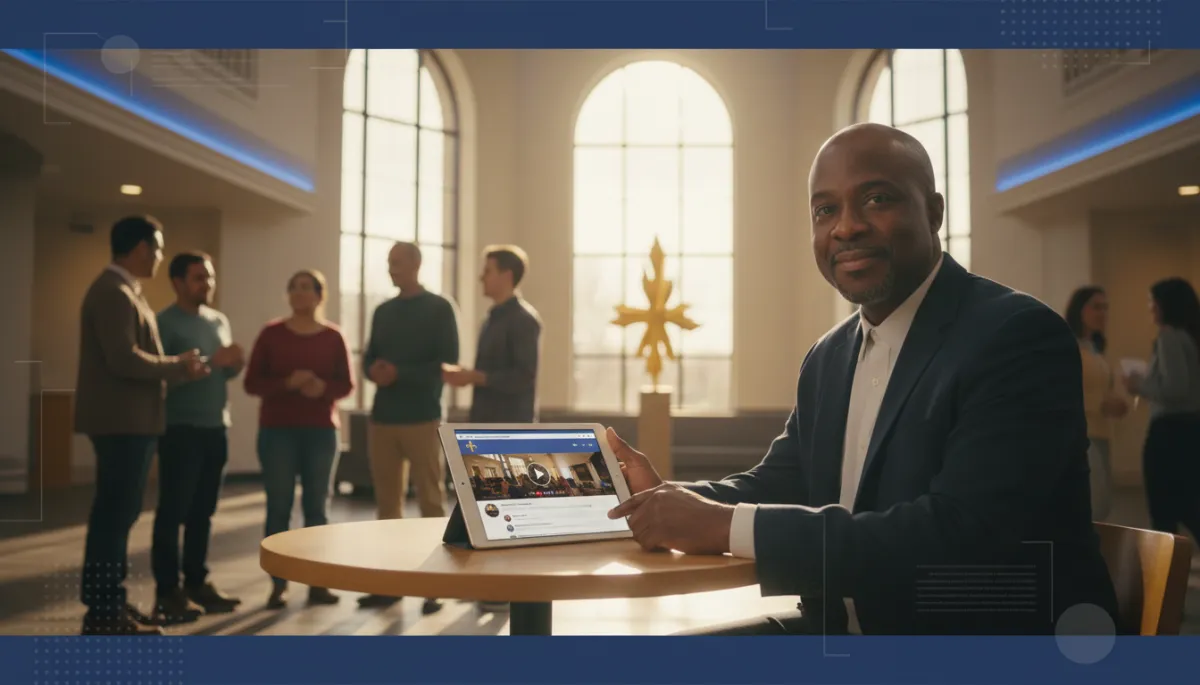
Consistent Facebook posts turn your church lobby into a seven‑day digital gathering place.
3. Instagram: Your Visual Storytelling Space
Now imagine this moment: ten minutes before service, your worship team gathers in a circle on stage. Someone quietly snaps a photo as they pray, heads bowed, guitars and cables everywhere, sunlight hitting the cross behind them. Later that day, your volunteer posts it on church Instagram with a simple caption: “Before the music, we pray.” It gets 200 likes and a flood of comments from people you have never seen in the building but who are clearly watching your story from a distance.
Instagram is where you let people see the heart of your church. It is one of the best social media for churches that want to reach younger adults, creatives, and people who live in pictures and short videos. Reels and Stories are the stars here. In 2026, short vertical videos with a strong three‑second hook often outperform static posts, especially when they feature real faces and real moments, not just slides full of text. Think “Come serve with us” filmed in the kitchen, not just “Volunteer Sunday” on a slide.
Best uses for church Instagram? Scripture graphics, Reels with sermon clips, Stories that show behind‑the‑scenes ministry, and quick testimonies. Your goal is not perfection; it is connection. Show the potluck set‑up, the youth group laughing, the quiet moment when someone is baptized. When people scroll past, you want them to think, “I could belong there.” That is how this church social media platform becomes a bridge from screen to seat.
4. YouTube: Your Online Sanctuary
Let me paint another scene. A man in a hospital bed in another state cannot get to church. One Sunday, he searches YouTube for “hope when you are scared” and your sermon pops up. He watches. Then he watches the next week. For six months, your church becomes his online sanctuary. When he finally recovers and moves near your city, he walks in one Sunday and says, “Pastor, I feel like I already know you.” That is the quiet power of a simple church YouTube strategy done well.
YouTube is one of the best social media for churches because it is not just social—it is a search engine. Around 85% of U.S. adults use YouTube, and among influential churches, it holds the majority of online followers. If your church has strong preaching, teaching, or worship, this is where that content can live, breathe, and keep serving people years after you preach it. Think of YouTube as a long‑term library of everything God is doing in your pulpit and on your stage.
Best uses for YouTube? Full sermons, sermon series playlists, discipleship courses, worship sets, and even YouTube Shorts made from sermon clips. A simple church YouTube strategy could be: post your full service or sermon every week, give it a clear title like “What the Bible Says About Anxiety,” add a short description, and organize messages into playlists. Over time, you build an online sanctuary where people can come any hour of the day, from any place in the world, and hear the gospel.
5. TikTok: Should Your Church Be There?
One more story. Your youth pastor records a 30‑second vertical video on their phone: “What the Bible says about anxiety.” No fancy lights, just a Bible, a calm voice, and a simple verse like 1 Peter 5:7, “Casting all your care upon him; for he careth for you” (KJV). They post it on TikTok, and by the end of the week it has 40,000 views. Most of those people have never heard of your church. Some of them start messaging, “Can you pray for me?”
That is the upside of TikTok. The algorithm is built for discovery, especially with younger people and now more 30‑somethings too. If you have a creative team or an active youth ministry that loves short videos, TikTok can be a powerful mission field. But here is the honest take: it only works if you can post consistently, at least 3–5 times a week, with content that feels real, not stiff. Think “youth pastor in a hoodie” more than “pastor in a three‑piece suit reading announcements.”
If you do not have the people or time, it is okay to say, “Not yet.” The best social media for churches is never the one that burns out your team. TikTok is a great option, not a commandment. If you do step in, start with simple clips from sermons, quick Bible answers, and stories of life change. Keep it short, honest, and full of hope. Let people see that the gospel speaks to the very real questions they are asking at 1 a.m. on their phones.
6. How to Choose the Right Platform for YOUR Church
Let us get practical. Think of your time and volunteers like a budget. As a numbers person, I would say you have a limited “ministry capital” account. You can invest it in a few strong positions or sprinkle it across everything and get weak returns. When you look at church social media platforms, you want to pick the ones that give the highest “kingdom return” for your unique church. Here are four questions to help you choose wisely.
Who is my primary audience? Think age, life stage, and tech comfort. If most of your people are 45+ and love sharing grandkid photos, Facebook is a strong first pick. If you are surrounded by college students and young professionals, Instagram and YouTube may be better starting points.
What type of content can we consistently create? Are you already recording sermons? That is a strong signal for YouTube. Do you have someone who loves taking photos and short clips? Instagram and TikTok get more attractive. Consistency beats perfection every time.
How many volunteers do we have for social media? If it is just you and one faithful teenager, start with one platform and build a simple rhythm. If you have a small team, you can add a second platform once the first is stable. Do not run faster than your people can walk.
Where is our community already spending time online? Ask them. Run a quick survey at church or in your email list. If 80% say Facebook and YouTube, that is your signal. You do not need to guess; you can actually check the “market data” of your own congregation.
Church Situation Primary Platform Secondary Platform Older congregation, family events focus Facebook YouTube (for sermons) Younger adults, creative city vibe Instagram YouTube or TikTok Strong preaching and teaching ministry YouTube Facebook or Instagram Active youth ministry, creative teens TikTok or Instagram YouTube Shorts
In trading, you set clear entry and exit rules so emotions do not run the show. You can do the same with church social media platforms. For example, “We will start with Facebook and YouTube. Our entry rule is posting three times a week on Facebook and one sermon a week on YouTube for three months. After that, we will review the ‘results’—comments, messages, new guests—and only then decide whether to add Instagram.” That kind of patient, steady approach protects your team and honors your calling. As Paul said, “Let all things be done decently and in order” (1 Corinthians 14:40 ESV).
7. Key Takeaways + FAQ
Key Takeaways
✅ You do not need to be on every platform—start with one and do it well.
✅ Facebook is great for community, events, and reaching older congregations.
✅ Instagram works best for visual storytelling and younger audiences.
✅ YouTube is your online sanctuary—perfect for sermons and discipleship content.
✅ Your platform choice should match your congregation, your content, and your capacity.
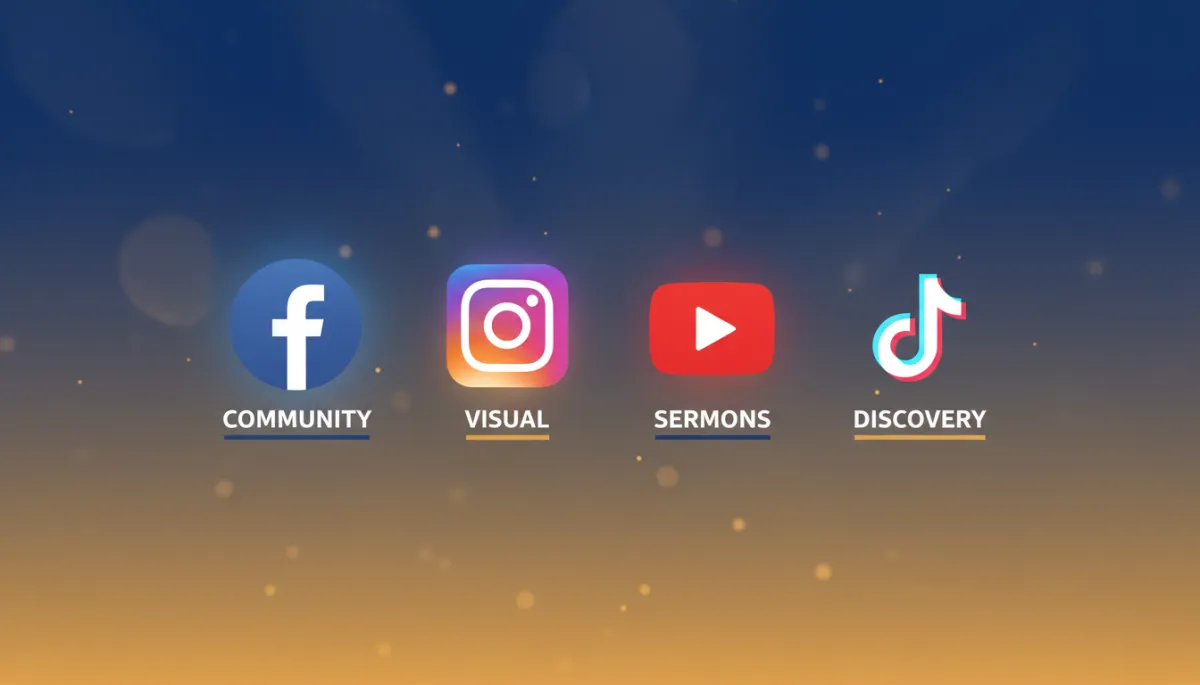
Comparing platforms side by side helps you invest your limited time wisely.
FAQ 1: Should our church be on all social media platforms?
No, you really should not. Trying to be everywhere usually means you are not truly present anywhere. Start with one or two of the best social media for churches that fit your people—often Facebook and YouTube—and build healthy habits there. Once those rhythms are strong, you can prayerfully consider adding another platform if it serves your mission, not your FOMO.
FAQ 2: What is the best social media platform for a small church?
For most small churches, the best starting combo is church Facebook plus a simple YouTube channel for sermons. Facebook helps with local community, events, and prayer requests. YouTube gives you a place to store and share messages over time. Think of it like choosing one checking account and one savings account for your “gospel investments”—simple, clear, and easy to manage with a tiny team.
FAQ 3: How often should a church post on social media?
Aim for consistency, not perfection. For Facebook and Instagram, 3–4 posts per week is a good starting point, plus Stories when you can. For YouTube, one solid sermon or teaching video each week is plenty. Think of it like regular meals for your people—not a Thanksgiving feast every day, just steady, nourishing content that points them to Jesus and your church family.
FAQ 4: Do we need professional equipment to post on social media?
Not at all. In 2026, many churches are growing online with nothing more than a decent smartphone, a cheap tripod, and good natural light. People care far more about clear sound and a caring message than about fancy lights. Start simple, improve as you go, and remember Paul preached in homes and marketplaces, not studios. Use what you have, and let God handle the reach.
FAQ 5: Can social media really help a church grow?
Yes, when you treat it as ministry, not just marketing. Social media will not replace prayer, personal invitation, or faithful preaching. But it can extend all three. People often visit your church online long before they visit in person. When you share hope, Scripture, and real stories consistently, God can use those posts to draw people in. As Mark 16:15 says, “Go into all the world and proclaim the gospel to the whole creation” (ESV). Today, part of that “world” is online.
What's Your Next Step?
This week, choose one platform that best fits your people and your capacity, and take a simple next step. Maybe that is starting a Facebook Group, uploading last Sunday's sermon to YouTube, or posting one honest behind‑the‑scenes photo on Instagram. Small faithful steps add up over time.
You don't have to do this alone. Invite one or two trusted volunteers to learn with you, experiment, and pray over your church social media platforms. Remember, the goal is not likes; it is lives changed by the gospel. As Philippians 4:13 reminds us, “I can do all things through Christ which strengtheneth me” (KJV)—including figuring out Instagram. 😄

One small, faithful step online this week can open new doors for ministry.
